Austria
Vienna Travel Guide
Habsburg grandeur on the Danube — imperial palaces, Klimt and Schiele, coffeehouse culture, and one of Europe's most livable capitals.
✨ Plan Your Vienna Trip with AIQuick Facts
Top Things to Do
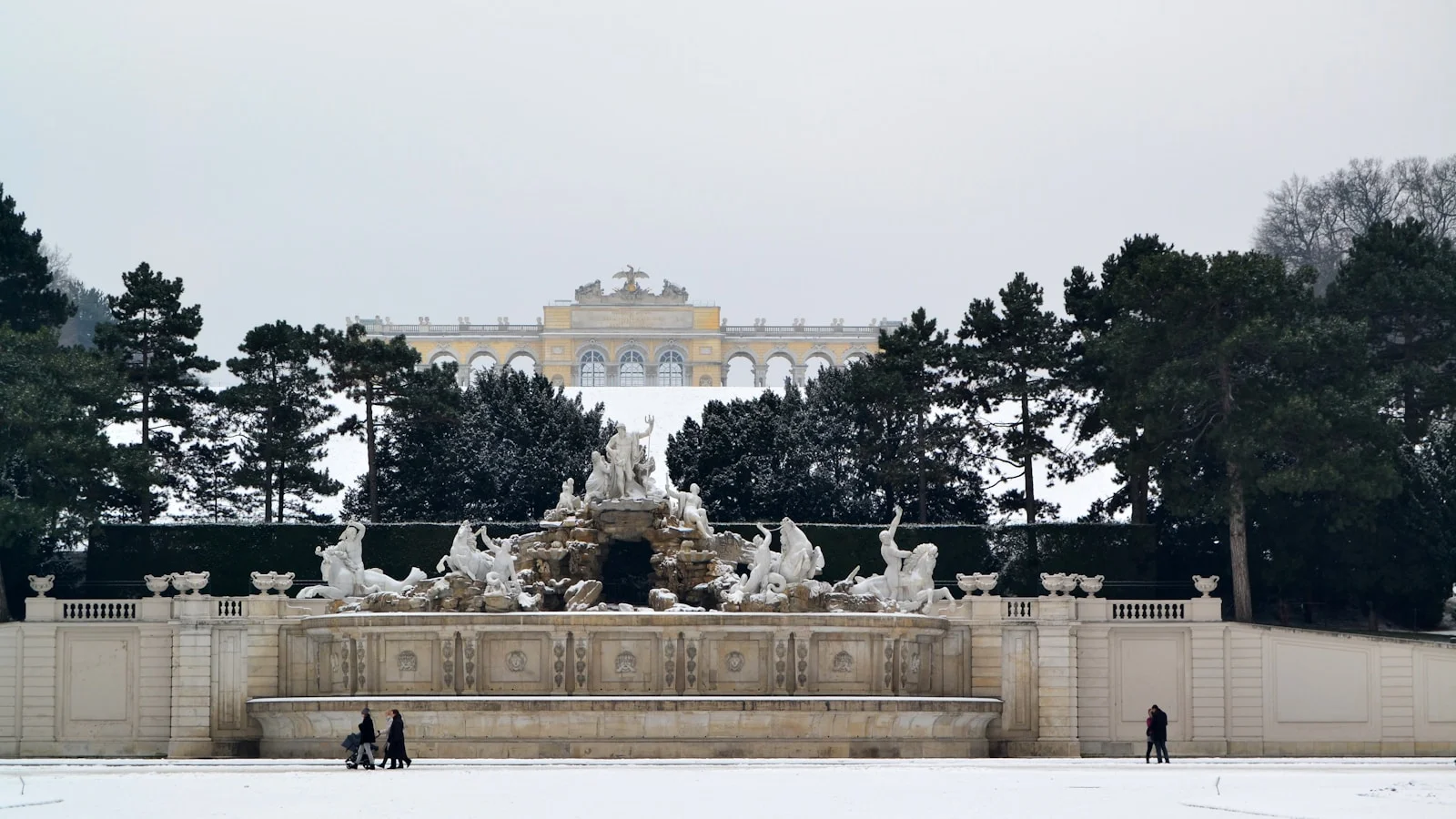
Schönbrunn Palace
The Habsburgs' 1,441-room summer residence — gilded staterooms, formal gardens, and the world's oldest zoo on the grounds.
Belvedere Palace
Baroque palace and home of Klimt's The Kiss — plus the largest Schiele collection anywhere and 19th-century Austrian masters.
St. Stephen's Cathedral
12th-century Gothic landmark in the Innere Stadt — climb the 343-step south tower for an unmatched rooftop view.
Hofburg Palace Complex
The Habsburgs' winter palace and now the seat of the Austrian presidency — Sisi Museum, Imperial Apartments, and Silver Collection.
Kunsthistorisches Museum
One of the world's finest old-master collections — Bruegel, Caravaggio, Vermeer, Rembrandt — in a building as ornate as the art.
Naschmarkt
Vienna's main open-air market — 120+ stalls of Austrian and Middle Eastern food, plus a Saturday flea market.
Why visit Vienna
Vienna trades on its imperial past more openly than any other European capital. Six hundred years of Habsburg power left palaces, museums, and formal gardens on a scale that feels disproportionate for a city of 1.9 million — and the city has been quietly preserving rather than demolishing that legacy for over a century.
But Vienna is more than nostalgia. It consistently ranks at the top of the world’s most livable cities surveys, has one of the strongest contemporary art scenes in Central Europe (MuseumsQuartier, Leopold, mumok), and its coffeehouse tradition is on UNESCO’s intangible cultural heritage list. Sitting for three hours over a single Melange is not just allowed — it’s the point.
Best time to visit
- April–May — Parks and palace gardens in bloom, comfortable temperatures (12–20°C), Easter markets in early April.
- June — Long days, café terraces full, the Vienna Festival (Festwochen) brings international theatre and music.
- July–August — Hot (often 30°C+), opera house closed for summer break, locals flee to lakes. Many smaller restaurants take vacations.
- September–October — Best mix of weather, opera season restart, Wachau wine harvest just east of the city.
- Late November–December — Christmas market season; the Rathausplatz market is iconic but Spittelberg is more authentic.
Getting around
The Wiener Linien network (U-Bahn, tram, bus, S-Bahn) is one of Europe’s most efficient. The historic center inside the Ringstraße is small enough to walk.
- Single ticket: €2.40 (90 minutes, transfers included)
- 24-hour pass: €5.80 — pays off after 3 rides
- Vienna Pass (1-6 days): from €82 — only worth it if you’ll hit 4+ paid major sights per day, otherwise individual tickets are cheaper.
- City bikes (WienMobil Rad): €15/year annual or €0.50 per 30-min ride; an honest alternative to ride-hailing for shorter hops.
The Ringstraße tram (lines 1, 2, D, 71) circles the historic center — sit at the front of a vintage red car and you get a 30-minute architectural tour for the price of a single ticket.
Suggested 3-day itinerary
- Day 1 — Imperial core: Hofburg complex (Imperial Apartments + Sisi Museum + Silver Collection) → Spanish Riding School morning training → Stephansdom + tower climb → Mozart concert or opera in the evening.
- Day 2 — Art masters and Belvedere: Belvedere Palace (Klimt, Schiele, Kokoschka) → tram to the Kunsthistorisches Museum → Naschmarkt lunch → MuseumsQuartier for contemporary art at Leopold or mumok.
- Day 3 — Schönbrunn and slow afternoon: Schönbrunn Palace early to beat the crowds → Gloriette breakfast view → tram back to the city → an afternoon in a classic Kaffeehaus (Sperl, Hawelka, or Bräunerhof) → Heuriger (wine tavern) dinner in Grinzing or Nussdorf.
Where to eat
Viennese cuisine is heavier than its reputation — schnitzel is just the start. The coffeehouses double as living rooms, libraries, and breakfast spots.
- Classic Viennese — Figlmüller (the schnitzel benchmark), Plachutta (Tafelspitz boiled beef), Gasthaus Pöschl.
- Coffeehouses — Café Central, Café Sperl, Café Hawelka, Demel for the Sachertorte/Imperial Torte debate. Pick a paper, order a Melange, stay an hour minimum.
- Modern Austrian — Tian (Michelin-starred vegetarian), Konstantin Filippou, Mraz und Sohn.
- Heuriger — Mayer am Pfarrplatz, Buschenschank Heinrich. Look for the green pine bough above the door — that means new wine is being served.
Want a personalized itinerary based on your interests and budget? Try the VoyAI Trip Planner.
Frequently Asked Questions
How many days do I need in Vienna?
Three full days cover the imperial palaces, two major museums, and one coffeehouse-and-music evening. Four days lets you fit a Wachau Valley wine day-trip or a deeper modernist art focus.
Is Vienna affordable compared to other capitals?
Cheaper than Paris or Zurich, similar to Berlin. The free entry to public collections like the Naschmarkt and parks keeps daily costs reasonable; opera standing-room tickets start at €13.
Should I see an opera or classical concert?
Yes — the Staatsoper sells 567 standing-room tickets 80 minutes before each performance for €13-18. Skip the tourist-trap "Mozart in costume" concerts at Schönbrunn; locals don't go.
When does Vienna's Christmas market season start?
Mid-November through 26 December. The Rathausplatz, Schönbrunn, and Spittelberg markets each have a different character; Spittelberg is the most artisanal and least touristy.
How do I get from the airport to the city center?
The S-Bahn S7 costs €4.40 and takes 25 minutes to Wien Mitte. The CAT (City Airport Train) is faster (16 min) but costs €14.90 and saves only a few minutes total once you factor in waits.
Ready to plan your trip?
Get a personalized day-by-day itinerary in seconds.
✨ Start with AI Trip Planner