Italy
Florence Travel Guide
The cradle of the Renaissance — Brunelleschi's dome, Michelangelo's David, Tuscan food, and a walkable historic center on a human scale.
✨ Plan Your Florence Trip with AIQuick Facts
Top Things to Do
Uffizi Gallery
The world's most important Renaissance painting collection — Botticelli's Venus and Spring, Leonardo's Annunciation, Caravaggio's Medusa.
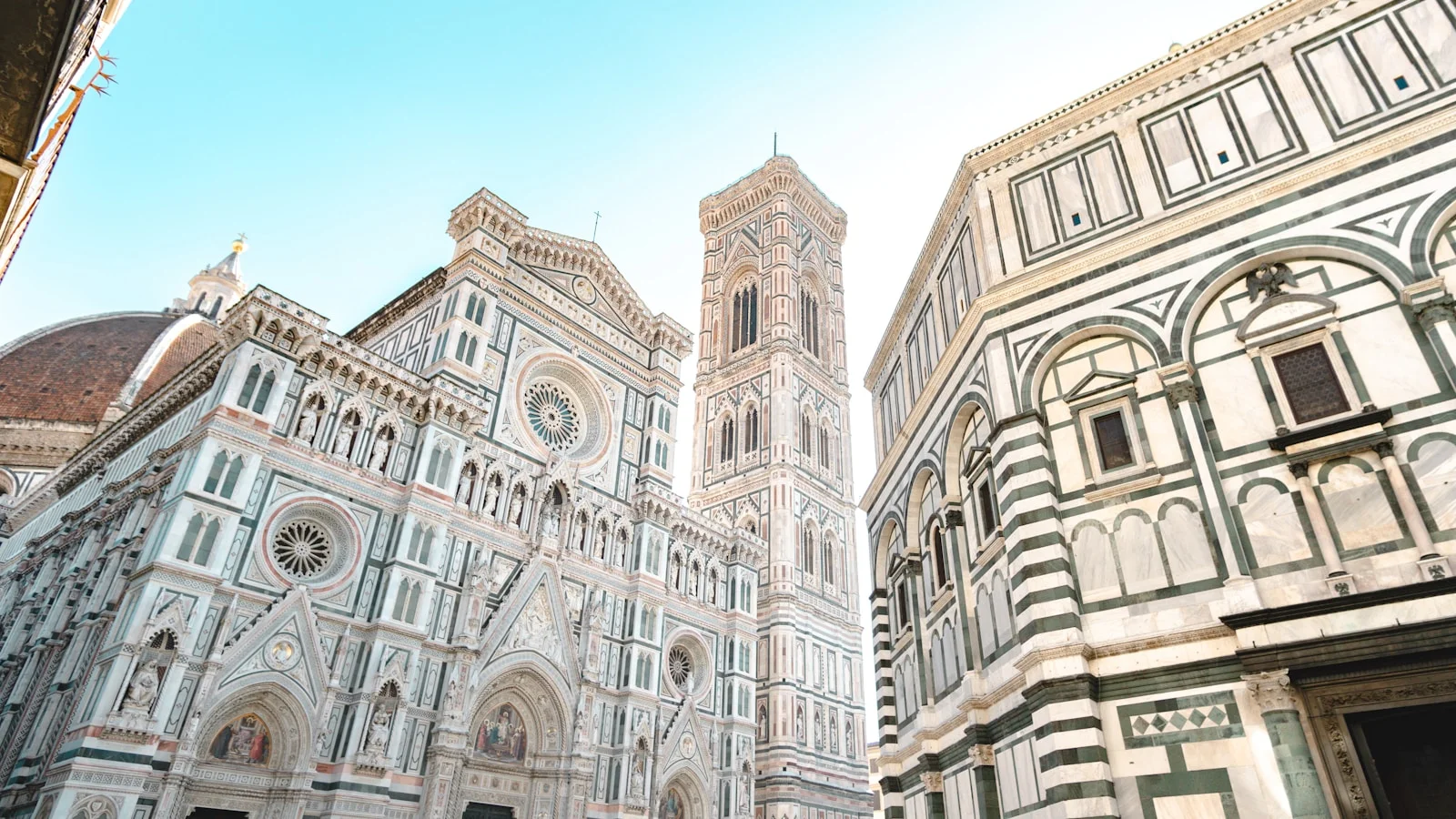
Duomo Complex
Brunelleschi's terracotta dome, Giotto's bell tower, the Baptistery's gilded doors — a single combined ticket covers all five sites.
Accademia Gallery
Home to Michelangelo's David and four of his unfinished Prisoners — a smaller, focused museum that rewards a 1.5-hour visit.
Ponte Vecchio
The medieval bridge of jewelers, the only Florence bridge spared in WWII. Best photographed from Ponte Santa Trinita at sunset.
Pitti Palace & Boboli Gardens
The Medici grand-ducal residence across the river — five museums in one palace plus a 45,000-square-meter Renaissance garden.
Piazzale Michelangelo
The classic panoramic terrace above the Oltrarno — climb at sunset for the postcard view of the city and the surrounding hills.
Why visit Florence
Florence concentrates more world-changing art into a single square mile than anywhere else on the continent. Brunelleschi figured out perspective here. Michelangelo carved David here as an unpaid 26-year-old. The Medici family bankrolled the Renaissance from their banking house three minutes from the cathedral. UNESCO listed the entire historic core in 1982.
Unlike Rome, Florence is human-scale. You can walk from the Duomo to the Uffizi to Ponte Vecchio to Pitti Palace in 25 minutes. The downside is how visible the tourism strain has become — 16 million annual visitors, short-term rental restrictions in place since 2023, and a low season that increasingly doesn’t exist. Book early, walk early, and the city still feels like the small Renaissance capital it has always been.
Best time to visit
- April–May — Tuscan hills green, comfortable temperatures (15-22°C), longer daylight. Easter week pricing spikes but the rest of the shoulder is the best value of the year.
- June — Warming up (24-28°C), Calcio Storico (medieval football matches in Piazza Santa Croce) on 24 June, longer evenings on the Arno.
- July–August — Hot (30-35°C) and dense with tour groups. Many smaller restaurants and family-run trattorias close for ferragosto in mid-August.
- September–October — Grape harvest in Chianti, golden light, museum crowds thin from late September. Often the year’s best month.
- November–February — Cold (5-12°C) and occasionally rainy, but the Uffizi and Accademia are bookable same-day. Italian opera season active at Maggio Musicale.
Getting around
Central Florence is walkable end-to-end in under 30 minutes. The bus network (ATAF) is fine but rarely necessary; the single tram line is mostly an airport shuttle.
- Single bus/tram ticket: €1.70 (90 minutes) — buy at any tabacchi before boarding, validate on the bus or you’ll be fined.
- Airport tram (T2): €1.70, 22 minutes to Santa Maria Novella station. The taxi flat rate is €22-26.
- City bikes (Mobike, Ridemovi): €0.50/15min — practical for the flat sections; less so for the Piazzale Michelangelo climb.
Avoid renting a car for the city itself — the entire historic core is a ZTL (limited traffic zone) and license plate cameras fine non-residents €100+ per pass. If you want to tour Chianti, pick the car up after you’ve checked out of your central hotel.
Suggested 3-day itinerary
- Day 1 — Duomo and Renaissance core: Duomo complex (combined ticket
- book the dome climb in advance) → Baptistery → Giotto bell tower → lunch at All’Antico Vinaio for the iconic schiacciata sandwich → Uffizi Gallery (booked, allow 3-4 hours) → sunset on Ponte Vecchio.
- Day 2 — Accademia, San Lorenzo, Oltrarno: Accademia for David early → Mercato Centrale (downstairs for shopping, upstairs for the food hall) → walk over Ponte Santa Trinita → afternoon in the Oltrarno’s artisan workshops → aperitivo at Le Volpi e l’Uva or Il Santo Bevitore.
- Day 3 — Pitti, Boboli, sunset on the hills: Pitti Palace (focus on Palatine Gallery and Costume Museum) → Boboli Gardens climb to the top for a quieter panorama → lunch in the Oltrarno → afternoon walk up to Piazzale Michelangelo → continue further up to San Miniato al Monte for the Gregorian chant vespers at 17:30 (winter) / 18:30 (summer).
Where to eat
Tuscan cuisine is deliberately rustic — bread without salt, beans cooked in chianti, charcoal-grilled steak measured by the kilo. The good trattorias have not changed their menus in fifty years.
- Classic Tuscan trattorias — Trattoria Mario (lunch only, no reservations, expect to share a table), Sostanza (for the famous butter chicken and bistecca), Trattoria Cammillo, Il Latini.
- Schiacciata sandwiches — All’Antico Vinaio (the original, three locations all on Via dei Neri), Semel, S. Forno.
- Modern Tuscan — Enoteca Pinchiorri (three-Michelin), La Leggenda dei Frati, Borgo San Jacopo, Il Palagio.
- Gelato — Vivoli (oldest in the city, since 1932), Gelateria della Passera, Perché No!, La Sorbettiera.
Want a personalized itinerary based on your interests and budget? Try the VoyAI Trip Planner.
Frequently Asked Questions
How many days do I need in Florence?
Three days fit the Uffizi, Accademia, Duomo climb, and a wander across the Oltrarno. Four lets you breathe and add a Chianti vineyard day trip or a half-day in Fiesole.
Do I need to book the Uffizi and Accademia in advance?
Yes — in high season (April-October) walk-up queues are 2-3 hours, and timed-entry tickets sell out 1-2 weeks ahead. Book directly through the official sites or the Firenze Card portal.
Is the Firenze Card worth it?
At €85 for 72 hours, it pays off only if you'll hit 5+ paid major museums in 3 days and value skip-the-line over the cash savings. Most 3-day visitors get more value from individual booked tickets.
When does the Duomo dome climb book up?
The Brunelleschi Dome climb is timed-entry and required to be booked online — usually 2-3 weeks ahead in peak season. The Giotto bell tower next door is also worth the climb and has slightly easier availability.
How does Florence compare to Rome on a first Italy trip?
Florence is smaller, more walkable, more focused on a single era (the Renaissance), and significantly less chaotic than Rome. Most first-timers combine both — 3 days Florence, 4 days Rome, with a 1.5h fast train between them.
Ready to plan your trip?
Get a personalized day-by-day itinerary in seconds.
✨ Start with AI Trip Planner