Netherlands
Amsterdam Travel Guide
A 17th-century canal city built on tolerance — gabled houses, world-class art, bike-first streets, and brown-cafe culture.
✨ Plan Your Amsterdam Trip with AIQuick Facts
Top Things to Do
Rijksmuseum
The Dutch national art museum — Rembrandt's Night Watch, Vermeer's Milkmaid, and 8,000 other works across the Golden Age and beyond.
Anne Frank House
The annex where Anne wrote her diary in hiding — sobering and small. Tickets are timed and sell out 6+ weeks ahead.
Van Gogh Museum
The world's largest single collection of Van Gogh — 200+ paintings, 500+ drawings, and his complete personal letters.
Jordaan Canal Belt
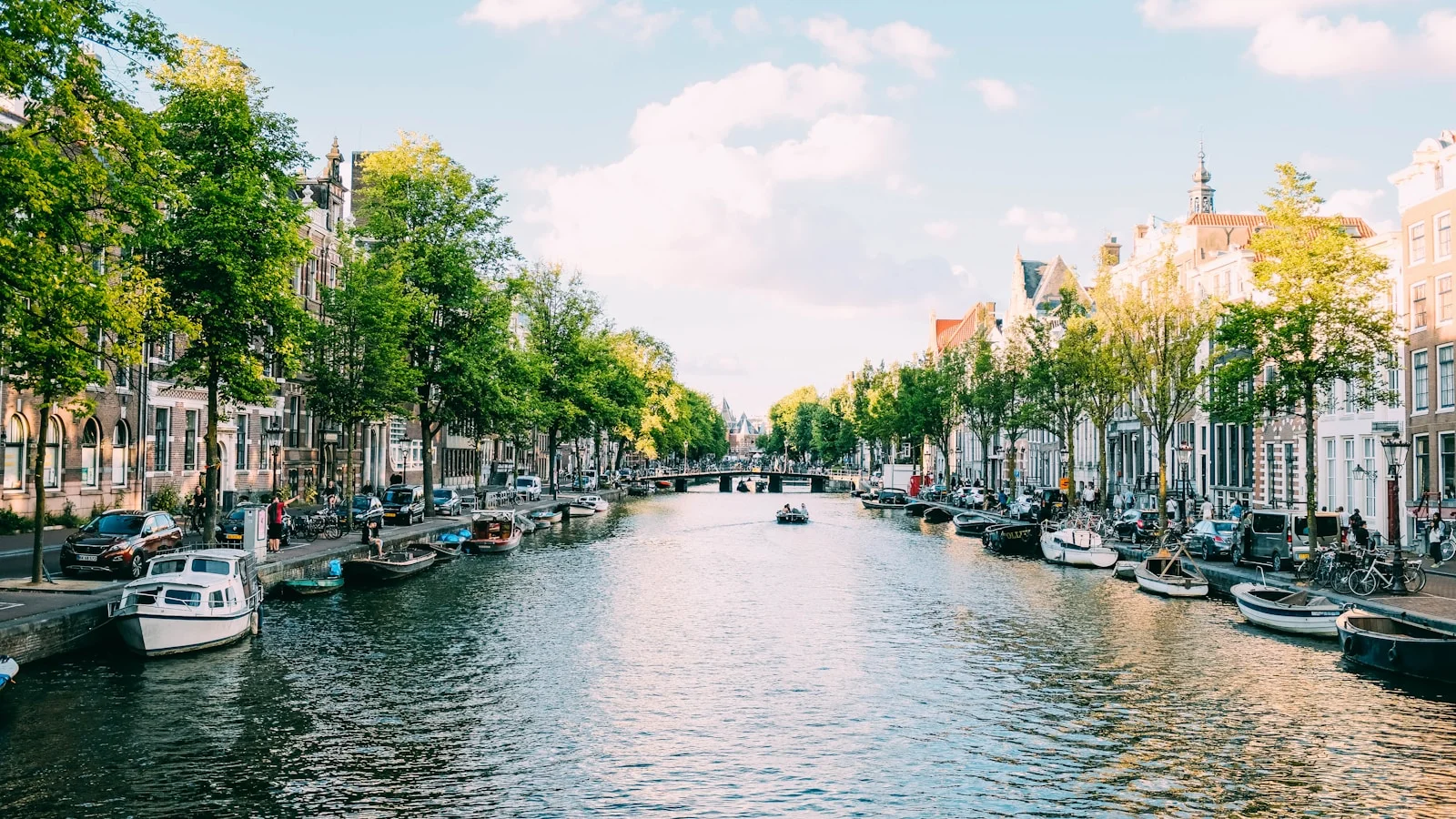
The most photogenic stretch of canals and 17th-century merchant houses — a UNESCO World Heritage site since 2010.
Vondelpark
Amsterdam's central green lung — 47 hectares of paths, ponds, and free open-air theatre in summer.
NEMO Science Museum
Renzo Piano's copper-clad ship of a building; the rooftop terrace gives one of the city's best free panoramas.
Why visit Amsterdam
Amsterdam packs more variety per square kilometer than almost any European capital. World-class art (Rijksmuseum, Van Gogh, Stedelijk), 17th-century canal architecture, a thriving design and food scene, and the kind of liberal social fabric that turned the city into a global symbol of tolerance — all within a 30-minute bike ride.
The historic core is compact and walkable, but Amsterdam rewards travelers who push past Dam Square. The Jordaan’s brown cafes, the Pijp’s covered markets, Noord’s industrial-turned-creative warehouses across the IJ — each neighborhood has a distinct character that the central postcard streets can’t show.
Best time to visit
- April–May — Tulip season at Keukenhof and across the country. Crowds ramp up, hotel prices climb 30-50%, but the city is at its most colorful.
- June — Long days (sunset after 22:00), warm but rarely hot, terraces packed. The best weather-to-crowds balance of the year.
- July–August — Peak crowds, peak prices. Pride Week (early August) is a city-wide street party.
- September — Light still good, prices drop, museums quieter.
- December — Cold, drizzly, and short days, but Sinterklaas markets and lit-up canals are atmospheric.
Getting around
Amsterdam is built for bikes and trams; cars are an active disadvantage.
- OV-chipkaart (or contactless bank card) — tap on and off every tram, bus, metro, and ferry. Default fare €1.07 plus €0.193/km. A typical central ride is €2-3.
- GVB day pass: €9 (24h) — pays off after 4 rides.
- Amsterdam & Region Travel Ticket: €22 (24h) includes the airport train and regional buses; useful if you’re day-tripping.
- Bike rental: €12-15/day from MacBike, A-Bike, or your hotel. Use the dedicated red bike lanes — never the pedestrian sidewalk.
The ferries behind Centraal Station to Amsterdam Noord are free and run 24/7; they’re the easiest way to reach EYE Filmmuseum and the NDSM warehouse district.
Suggested 3-day itinerary
- Day 1 — Canals and the Golden Age: Rijksmuseum (allow 3-4 hours) → Museumplein lawn lunch → Bloemenmarkt floating flower market → walk the Jordaan canal belt → dinner at a brown cafe like Cafe Chris.
- Day 2 — Anne Frank and the Old Center: Anne Frank House (booked weeks ahead) → Westerkerk → walk to the Begijnhof courtyard → afternoon at the Stedelijk or Moco → canal cruise at golden hour.
- Day 3 — Noord and the Pijp: morning ferry to NDSM → coffee at Pllek → EYE Filmmuseum architecture → tram south to the Pijp → Albert Cuyp market → dinner at Bar Fisk or Scheepskameel.
Where to eat
Dutch cuisine itself is humble (raw herring, bitterballen, stroopwafels), but Amsterdam’s restaurant scene is one of Europe’s most international.
- Indonesian rijsttafel — Tempo Doeloe, Sampurna, or Blauw for the classic 15-20 dish colonial-era feast.
- Modern Dutch — De Kas (in a greenhouse), Choux, Lt. Cornelis.
- Brown cafes — Cafe Chris (oldest in the Jordaan), Cafe ‘t Smalle, In ‘t Aepjen — these are for jenever and conversation, not dinner.
- Markets — Albert Cuypmarkt (de Pijp), Noordermarkt (Saturdays in the Jordaan), Foodhallen for indoor food-court variety.
Want a personalized itinerary based on your interests and budget? Try the VoyAI Trip Planner.
Frequently Asked Questions
How many days do I need in Amsterdam?
Three full days cover the major museums, two canal-side neighborhoods, and one half-day trip (Zaanse Schans or Haarlem). Four days lets you slow down or add the Keukenhof tulip gardens in April-May.
Do I need to book museums in advance?
Yes for the Anne Frank House (6+ weeks ahead, timed entry only) and strongly recommended for the Rijksmuseum and Van Gogh Museum during peak season. Walk-ups are often turned away.
Is Amsterdam bike-friendly for tourists?
Extremely — but the locals ride fast and won't wait. Stick to the bike lanes, signal turns, and avoid the central canals on your first day. MacBike and A-Bike rentals are everywhere.
When do the tulips bloom?
Late March through mid-May, peaking in mid-to-late April. The Keukenhof gardens are open roughly 20 March - 11 May; book entry and a Schiphol-area shuttle bus combo to skip the queues.
Is Amsterdam safe at night?
Generally yes, including the Red Light District which is well-policed. Watch for bike thieves, tram-stop pickpockets, and the e-bike scooter chaos around Leidseplein after midnight.
Ready to plan your trip?
Get a personalized day-by-day itinerary in seconds.
✨ Start with AI Trip Planner